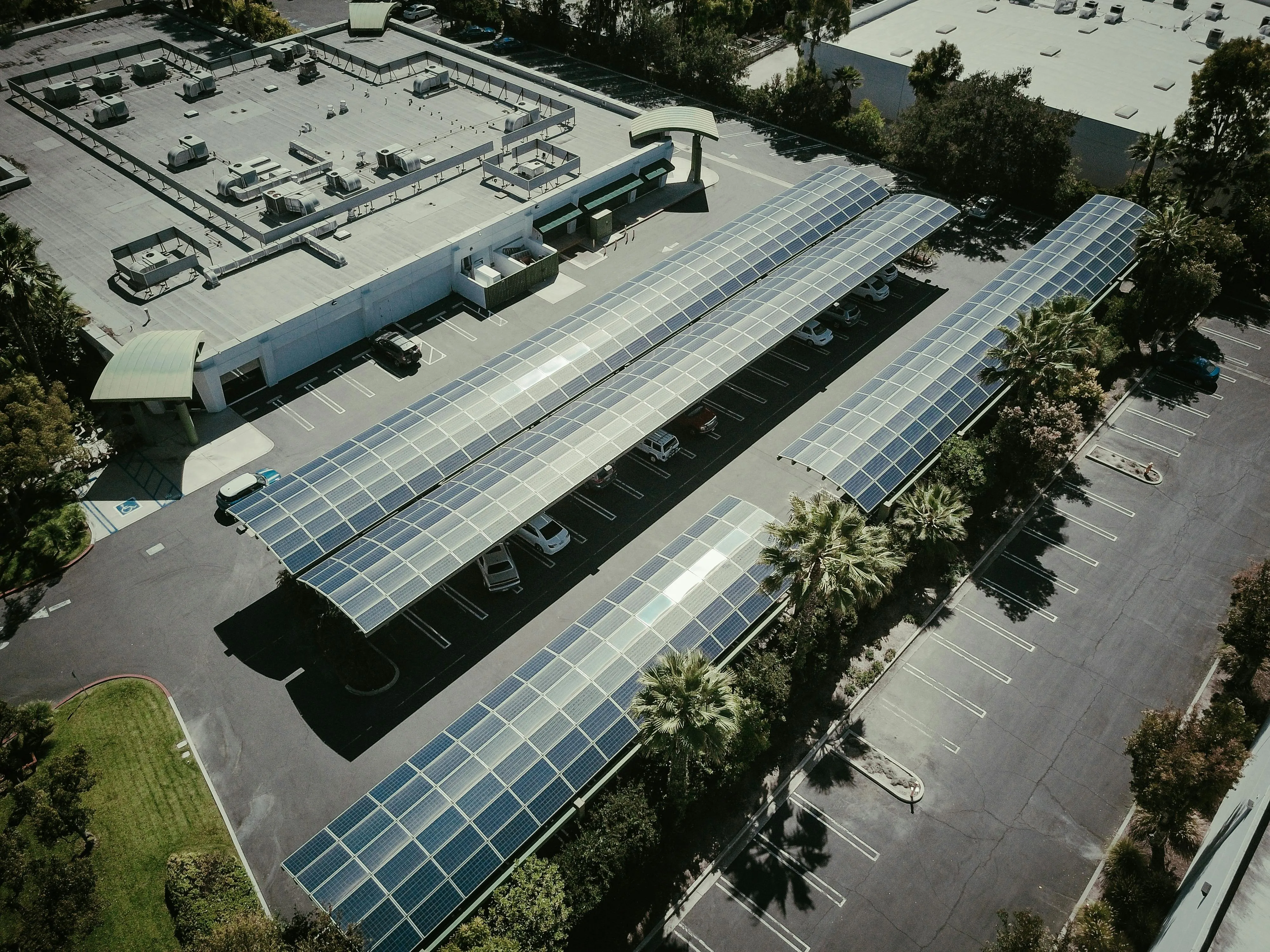
A commercial solar and battery system is sold as a long-term financial asset. It is modelled over fifteen or twenty years, financed against projected savings, and signed off on the strength of an internal rate of return. Then, in most cases, something strange happens. The system is commissioned, the handover pack is filed, and the asset is left to run exactly as it was configured on day one. Nobody owns its performance after that. It becomes an orphaned asset.
The system still generates power, so the problem stays invisible. Panels feed the building, the battery charges and discharges, the bill is lower than it used to be. Everyone moves on. What no one sees is the widening gap between what the asset was modelled to deliver and what it actually delivers, because the three things the financial model depended on all change after year two, and the system does not.
What “left on autopilot” really means
When a system is commissioned, its dispatch logic is set once. The battery is told, in effect, when to charge and when to discharge based on the tariff and load profile that existed at the time. That instruction set then runs unchanged, month after month, regardless of what happens around it.
Active stewardship treats dispatch as a question that has to be re-answered continuously. Soluno’s optimiser re-solves the next twenty five hours of dispatch at thirty minute resolution on every cycle, and re-runs that calculation across an entire portfolio of sites on a schedule rather than at a single point in time. An orphaned system runs none of this. It simply repeats whatever it was set to do when the technicians left.
The three things that drift
Your tariff moves every year, and the shape of it changed. NERSA approved direct Eskom tariff increases of 18.65 percent in 2023, 12.74 percent in 2024, 12.74 percent in 2025 and 8.76 percent for the year from April 2026. Compounded, that is roughly a 64 percent rise in four years. More important than the headline number, the time-of-use structure itself was restructured in February 2025: the morning peak was cut to two hours, the evening peak was extended to three, and off-peak rates were equalised across seasons. A battery whose charge and discharge windows were tuned to the old structure is now arbitraging against a tariff that no longer exists.
Your battery is quietly losing capacity. Lithium iron phosphate cells lose capacity in the order of one to four percent per year depending on how hard they are cycled and how deeply they are discharged. By year three a pack can be several percentage points down on its nameplate, which means the dispatch plan written for the original capacity is now asking the battery to deliver energy it no longer holds. Soluno derives wear directly from state-of-charge history using rainflow cycle counting against per-chemistry depth-of-discharge tables, so the curve is watched and the dispatch is adjusted to it. On an orphaned asset, nobody is watching that curve at all.
Your building changed. Tenants come and go, production lines are added, cold storage is expanded, operating hours shift. The load profile the system was tuned against in year one is not the load profile it serves in year three. The asset keeps optimising for a building that no longer exists.
What the drift costs
None of these failures trip an alarm. The system does not break. It just leaves money on the table, in three ways at once: it charges and discharges into the wrong tariff windows, it plans around capacity the battery no longer has, and it serves a load shape that has moved. Each one is a few percent. Together, compounding over years, they are the difference between the return that was modelled and the return that is actually earned.
The reverse case shows the size of the prize. At a roughly 500 kW commercial system in Stellenbosch, active management of an existing asset, with no new hardware, reduced energy costs by about half. The point is not the headline figure. The point is that the savings came from managing the asset rather than from buying more of it. That upside exists in most orphaned systems too. It is simply never collected, because no one is looking for it.
Stewardship is the missing layer
An installer’s job ends at commissioning. That is the correct scope for an installer. The gap is that the asset’s working life is twenty years and the relationship that created it lasted twenty weeks. Somebody has to own performance across the remaining nineteen years and change with the tariff, the hardware and the building.
That is what asset management is for. In practice it looks like a small number of recurring disciplines:
- Re-tuning dispatch as the tariff structure and rates change, rather than once at commissioning.
- Tracking battery health from real cycle data and feeding it back into the dispatch plan.
- Re-baselining against the building’s current load, not its commissioning-day load.
- Reading the gap between modelled and actual performance every month, and acting on it.
None of this requires new panels or a bigger battery. It requires somebody whose job is the asset’s financial performance over its whole life, not just its first day.
The question worth asking
If you own a commercial solar system that is more than two years old, there is one question worth asking your finance team: who is accountable for this asset’s performance this year, and how would we know if it had drifted from plan? If the honest answer is that the system was commissioned and has run untouched since, the asset is almost certainly underperforming the model it was financed on. The good news is that the gap is recoverable, and recovering it costs far less than the hardware already in the ground.
Sources and further reading
Want to know what your solar asset could save?
How Much Do I Save?