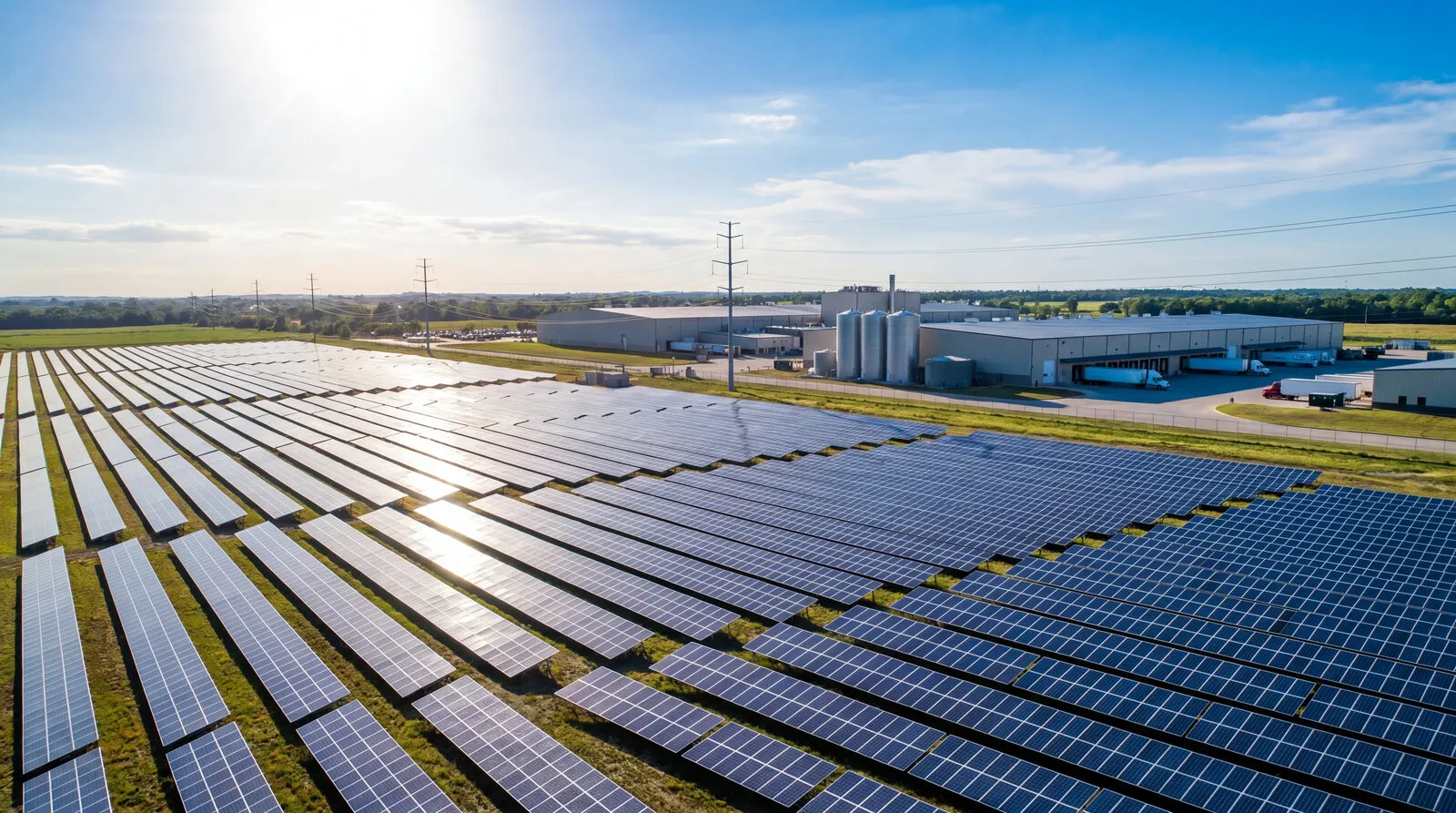
“Up to 50 percent cost reduction” is the kind of figure that earns a raised eyebrow, and it should. Most savings numbers attached to solar are projections: what a system might do, modelled on a spreadsheet before anything is on the roof. This one is different. It is a measured result from a real site, a roughly 500 kW system at a hotel in Stellenbosch, and the energy cost there came down by about half. The detail that matters is not the percentage. It is where the percentage came from. No new panels were added. No bigger battery was bought. The asset that delivered the saving was the asset that was already there.
That distinction is the whole point of this post, because it changes what you do with the number. If half your energy cost can come off through active management of hardware you already own, then the lever most operators reach for first, buying more capacity, is often not the lever that pays.
Where the number actually comes from
It is easy to assert a saving and hard to prove one. The honest way to state a saving is to put two bills side by side: what you actually paid, and what you would have paid for the same energy with no solar and no battery at all. The gap between the two is the value the asset created in that period, in rand, not in projection.
That second bill is a counterfactual. The building did not pay it. It is the bill the site would have received if every kilowatt-hour it consumed had been drawn from the grid at the prevailing tariff. Soluno computes both: the actual grid bill the site paid, and this shadow bill built from total load energy as if there were no asset behind the meter. Setting one against the other is what turns “we think we saved you money” into “here is the saving, and here is the arithmetic.”
Because the comparison is built from the site’s own consumption against its own tariff, it is auditable. It can be read line by line: usage in kilowatt-hours, the rate applied, and the cost difference between the baseline period and the period being measured. A finance team does not have to take the headline on faith. They can take it apart.
Why managing the asset beats buying more of it
Here is the part that surprises people. The saving at that site did not require any additional hardware. It came from running the existing battery against the tariff more intelligently than a fixed, commissioning-day setting ever could.
A behind-the-meter battery earns its keep by moving energy in time. It charges when energy is cheap and discharges when energy is dear, and the spread between those two prices is the margin it captures. South African time-of-use tariffs make that spread large. The reform NERSA approved in February 2025 compressed the ratio of summer off-peak to winter peak from 1:8 to 1:6, but the spread that remains is still wide, and the same battery earns very differently across the seasons because winter peak rates sit far above off-peak. A battery that charges and discharges into the right half-hours captures that spread. A battery that does not, leaves it on the table.
Capturing it is an optimisation question, not a hardware one. Soluno’s optimiser solves for the least-cost charge and discharge plan over the coming day at half-hour resolution, biasing charging to the cheapest periods and discharging into the most expensive, and re-solving as conditions change rather than once at handover. That is the engine behind the Stellenbosch result. It is also the reason the result was available without spending a cent on new equipment: the value was already latent in the asset and was simply not being collected.
The part of the bill a battery cannot touch
A frank case insight has to name the limits too, because they shape how big the recoverable number really is.
Not every line on a commercial bill responds to arbitrage. From the financial year beginning April 2026, the fixed portion of Eskom’s Generation Capacity Charge rose from 20 percent to 30 percent, shifting more of the bill into a charge that does not move with when you draw power. A battery cannot arbitrage a fixed charge away. What it can do is protect the demand-related lines: by holding grid import below the site’s notified maximum demand at the moments that matter, it defends the demand charge, a substantial line on a commercial account that rises with every tariff increase.
So the realistic framing is this. Active management goes hard at the energy and demand portions of the bill, which is where most of the recoverable money sits, and it cannot do much about the fixed portion, which is growing. Knowing the split is what keeps a saving claim honest. A result this size lands where the energy and demand portions of the bill are substantial and the asset is being worked properly against them.
Why the number is not a one-off
A saving captured once and then left alone does not stay captured, because the conditions it was won against keep moving.
- Tariffs rise every year. Direct Eskom increases ran 18.65 percent, then 12.74 percent, then 12.74 percent, then 8.76 percent for the year from April 2026, and a further 8.83 percent is already approved for the year from April 2027. The rand value of every well-timed discharge climbs with each one.
- The shape of the tariff changes too. The 2025 restructure cut the morning peak to two hours and extended the evening peak to three. A dispatch plan tuned to the old windows is now arbitraging against a tariff that no longer exists.
- The battery quietly loses capacity, on the order of one to four percent a year depending on how hard it is cycled, so the plan written for its original capacity slowly asks for energy it no longer holds.
- The building changes. Tenants, equipment and operating hours move, and the load the system was tuned against drifts away from the load it now serves.
None of these trip an alarm. The system keeps running, the lights stay on, and the saving erodes invisibly. Holding a 50 percent result, or even getting close to it, is therefore not a single clever configuration. It is the discipline of re-solving the dispatch plan as the tariff, the hardware and the building all move underneath it. That is stewardship, and it is the work that a one-time deployment, by design, does not include.
The takeaway
“Up to 50 percent” is real, it is measured, and it came from managing an existing asset rather than enlarging it. Treat it as a question rather than a promise. If you own a commercial solar and battery asset, the question is not whether you could save more by buying more. It is how much of the saving already sitting in your current hardware is being collected, and how you would know. Put your actual bill next to the bill you would have paid with no asset at all. If nobody can build that comparison for you, line by line, then nobody is managing the value, and the number that proves the asset is earning its keep is the first thing worth asking for.
Sources and further reading
Want to know what your solar asset could save?
How Much Do I Save?